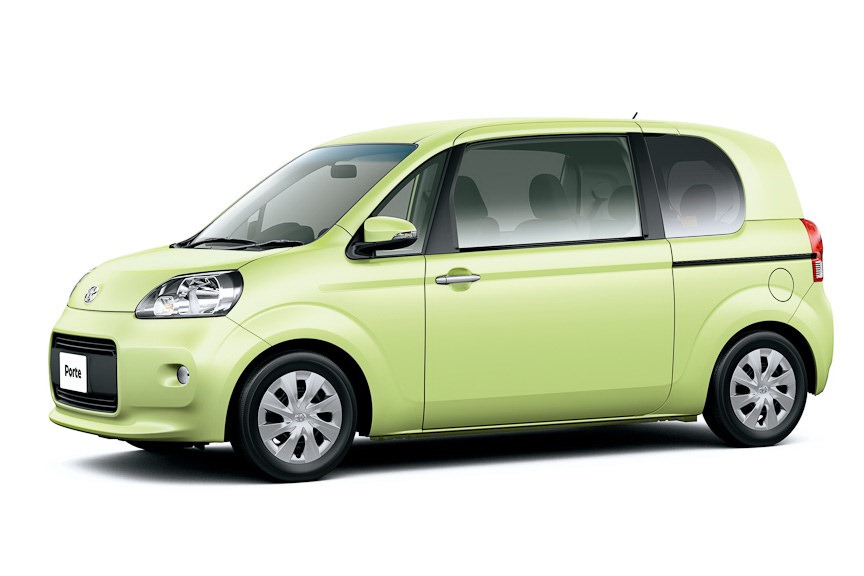
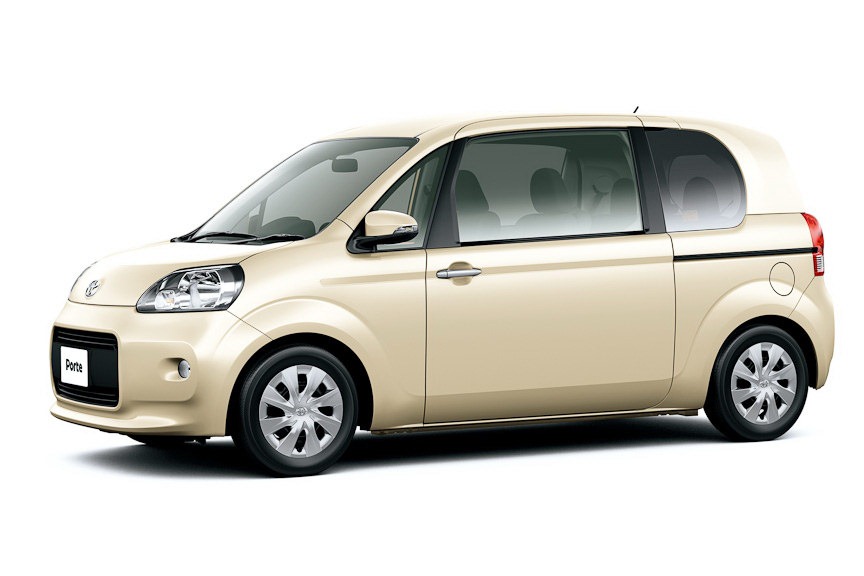
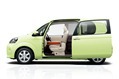
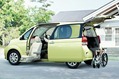
Responding to increased demand for subcompact cars with minivan-like features in its home market of Japan, Toyota has given its Porte model a makeover while also introducing a second variant of the series named Spade. The two cars, which are similar in philosophy to the Peugeot 1007 (2004-2009), differ only in their exterior appearance with the Spade sporting a boxier front end with sharper lines and headlamps and bespoke tail lamp graphics and rear bumper trim.
 Both models are equipped with a single, remote-controlled electric sliding door (1,020 mm wide by 1,250 mm tall) on the passenger side and two conventional doors on the driver's side, and measure 3,995mm long (157.3 inches), 1,695mm (66.7 inches) wide and 1,690mm (66.5 inches) tall, while riding on a comfy 2,600mm (102.4 inches) wheelbase.
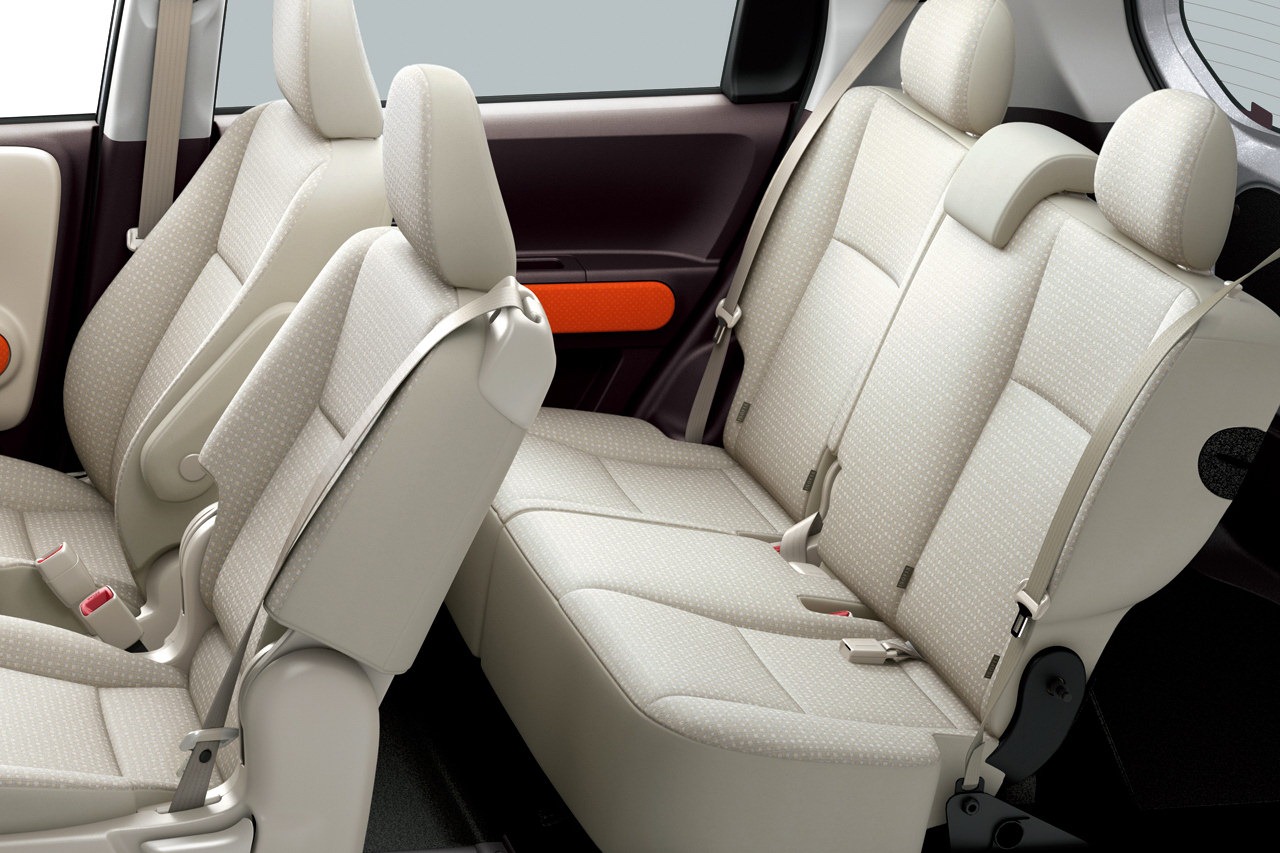
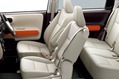
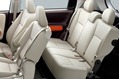
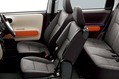
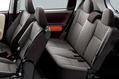
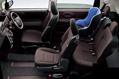
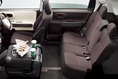
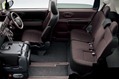
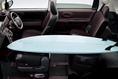
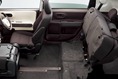
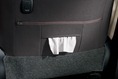
The five-seater cabin comes with all sorts of practical features ranging from a front passenger seat that folds down completely to form a table and which can be adjusted back and forth 700 mm, to a 60/40-split rear seat with seat cushion tip-up functio, and hooks for hanging shopping bags to specially designed tissue holders front and back.
Powertrain options include 1.3-liter and an updated 1.5-liter petrol engines coupled to a Super CVT-i (Continuously Variable Transmission-intelligent) automatic transmission and either front- or all-wheel drive.
Prices for the Toyota Spade and Porte in Japan range from 1,450,000 Yen to 1,910,000 Yen (US$18,450 to US$24,300 / €15,100 to €19,900).
Both models are equipped with a single, remote-controlled electric sliding door (1,020 mm wide by 1,250 mm tall) on the passenger side and two conventional doors on the driver's side, and measure 3,995mm long (157.3 inches), 1,695mm (66.7 inches) wide and 1,690mm (66.5 inches) tall, while riding on a comfy 2,600mm (102.4 inches) wheelbase.
The five-seater cabin comes with all sorts of practical features ranging from a front passenger seat that folds down completely to form a table and which can be adjusted back and forth 700 mm, to a 60/40-split rear seat with seat cushion tip-up functio, and hooks for hanging shopping bags to specially designed tissue holders front and back.
Powertrain options include 1.3-liter and an updated 1.5-liter petrol engines coupled to a Super CVT-i (Continuously Variable Transmission-intelligent) automatic transmission and either front- or all-wheel drive.
Prices for the Toyota Spade and Porte in Japan range from 1,450,000 Yen to 1,910,000 Yen (US$18,450 to US$24,300 / €15,100 to €19,900).
2013 TOYOTA PORTE



2013 TOYOTA SPADE

















A V12 engine is a rare sight indeed in the automotive world and if we had to pick one maker closely associated with it, then it would have to be Ferrari.  Even the very first model to bear the prancing horse logo, the 1947 125 S, was powered by a 1.5-liter V12 designed by Gioacchino Colombo and it would set the specs for Ferrari’s V12s until the end of the 1980s, long after its creator had left Maranello.
The thing is, even though Ferrari had stayed loyal to the V12 layout in its Formula 1 cars for more than five decades, in 1996, the F310 driven by new signing Michael Schumacher was powered by a V10 –simply because it was a better. Moreover, subsequent rule changes meant that today a V8 is mandatory.
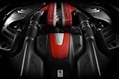
During the launch of the F12berlinetta, it was mentioned that the 730HP engine nesting behind the coupe's sculpted nose was “the first in a new generation of V12s”.
The next car in line is the Enzo replacement. However, traditions don’t necessarily last forever. Are V12-engined Ferraris going to be a thing of the past because of tightening fuel consumption and carbon dioxide emissions?
Ferrari CEO Amedeo Felisa said that the F1-developed kinetic energy recovery system (KERS) will ensure that the company will keep the V12 in its engine line-up for years to come.
“We will roll out new technology that is there first and foremost to introduce a green factor to our cars and ensure that we can keep our product where it is in terms of CO2”, Felisa told British publication Autocar.
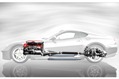
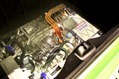
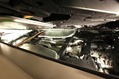
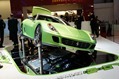
Having experimented with other layouts as well, Ferrari decided to go the hybrid way. It gave us a sneak preview of what it has in store for its future V12s at the 2010 Geneva Motor Show with the 599-based HY-KERS concept.
The hybrid system comprises a compact and light electric motor coupled to the dual-clutch gearbox and a battery pack encased in the underbody. It cuts CO2 emissions by 35 percent while, at the same time, adding another 100HP to the car’s total output, verifying Felisa’s claim that “our hybrid system won’t be just about creating power, but saving energy too”.
Felisa commented, “This technology is expensive today, but it has been designed to fit all our future architecture”. So, will all future Ferraris be hybrids? “If we go ahead, it will be fitted as standard. It’s not the sort of thing you offer as an option," explained Felisa.
Finally, Ferrari’s CEO did not dismiss the notion of offering six-cylinder engines on future models: “Why not six cylinders? It’s far away in the future, perhaps, but it is clear that perceptions have altered. Even in the US, where until a few years ago eight cylinders was the minimum, it is clear attitudes have changed”.
For those of you that baulk at the idea of a Ferrari with less than eight cylinders, we’ll just say that the company’s first mid-engined road car, the 1966 206 Dino, was powered by a V6. So maybe it won’t be merely downsizing, but a return to the company’s roots, as well.
Even the very first model to bear the prancing horse logo, the 1947 125 S, was powered by a 1.5-liter V12 designed by Gioacchino Colombo and it would set the specs for Ferrari’s V12s until the end of the 1980s, long after its creator had left Maranello.
The thing is, even though Ferrari had stayed loyal to the V12 layout in its Formula 1 cars for more than five decades, in 1996, the F310 driven by new signing Michael Schumacher was powered by a V10 –simply because it was a better. Moreover, subsequent rule changes meant that today a V8 is mandatory.
During the launch of the F12berlinetta, it was mentioned that the 730HP engine nesting behind the coupe's sculpted nose was “the first in a new generation of V12s”.
The next car in line is the Enzo replacement. However, traditions don’t necessarily last forever. Are V12-engined Ferraris going to be a thing of the past because of tightening fuel consumption and carbon dioxide emissions?
Ferrari CEO Amedeo Felisa said that the F1-developed kinetic energy recovery system (KERS) will ensure that the company will keep the V12 in its engine line-up for years to come.
“We will roll out new technology that is there first and foremost to introduce a green factor to our cars and ensure that we can keep our product where it is in terms of CO2”, Felisa told British publication Autocar.
Having experimented with other layouts as well, Ferrari decided to go the hybrid way. It gave us a sneak preview of what it has in store for its future V12s at the 2010 Geneva Motor Show with the 599-based HY-KERS concept.
The hybrid system comprises a compact and light electric motor coupled to the dual-clutch gearbox and a battery pack encased in the underbody. It cuts CO2 emissions by 35 percent while, at the same time, adding another 100HP to the car’s total output, verifying Felisa’s claim that “our hybrid system won’t be just about creating power, but saving energy too”.
Felisa commented, “This technology is expensive today, but it has been designed to fit all our future architecture”. So, will all future Ferraris be hybrids? “If we go ahead, it will be fitted as standard. It’s not the sort of thing you offer as an option," explained Felisa.
Finally, Ferrari’s CEO did not dismiss the notion of offering six-cylinder engines on future models: “Why not six cylinders? It’s far away in the future, perhaps, but it is clear that perceptions have altered. Even in the US, where until a few years ago eight cylinders was the minimum, it is clear attitudes have changed”.
For those of you that baulk at the idea of a Ferrari with less than eight cylinders, we’ll just say that the company’s first mid-engined road car, the 1966 206 Dino, was powered by a V6. So maybe it won’t be merely downsizing, but a return to the company’s roots, as well.
PHOTO GALLERY




 If you happen to own a 2012 Volvo S60 sedan and/or a XC60 crossover in the States, there's a good chance you'll soon receive a recall letter from the Swedish automaker because of a potential fire risk. "An incorrect mixture of underbody coating and over-application can result in rigid, icicle-like areas hanging from vehicle’s undercarriage," read Volvo's document posted on the website of the National Highway Traffic Safety Administration.
"If this condition exists, the underbody coating may penetrate the fuels lines and cause fuel leakage, increasing the risk of a fire"
Volvo said that the S60 sedans affected were produced between January 10, 2012, and February 3, 2012, while the X60 models were made from January 10 to 26, 2012. Overall, the safety recall concerns 2,742 S60 and XC60 models.
The company said its dealers will inspect the vehicle undercarriage, and if they find excessive underbody coating in the fuel line area, it will be removed. In the event that the fuel lines are damaged, they will be replaced.
Volvo expects the safety recall to begin on April 13.
If you happen to own a 2012 Volvo S60 sedan and/or a XC60 crossover in the States, there's a good chance you'll soon receive a recall letter from the Swedish automaker because of a potential fire risk. "An incorrect mixture of underbody coating and over-application can result in rigid, icicle-like areas hanging from vehicle’s undercarriage," read Volvo's document posted on the website of the National Highway Traffic Safety Administration.
"If this condition exists, the underbody coating may penetrate the fuels lines and cause fuel leakage, increasing the risk of a fire"
Volvo said that the S60 sedans affected were produced between January 10, 2012, and February 3, 2012, while the X60 models were made from January 10 to 26, 2012. Overall, the safety recall concerns 2,742 S60 and XC60 models.
The company said its dealers will inspect the vehicle undercarriage, and if they find excessive underbody coating in the fuel line area, it will be removed. In the event that the fuel lines are damaged, they will be replaced.
Volvo expects the safety recall to begin on April 13.
PHOTO GALLERY


 Print this page
 Responding to increased demand for subcompact cars with minivan-like features in its home market of Japan, Toyota has given its Porte model a makeover while also introducing a second variant of the series named Spade. The two cars, which are similar in philosophy to the Peugeot 1007 (2004-2009), differ only in their exterior appearance with the Spade sporting a boxier front end with sharper lines and headlamps and bespoke tail lamp graphics and rear bumper trim.
  Both models are equipped with a single, remote-controlled electric sliding door (1,020 mm wide by 1,250 mm tall) on the passenger side and two conventional doors on the driver's side, and measure 3,995mm long (157.3 inches), 1,695mm (66.7 inches) wide and 1,690mm (66.5 inches) tall, while riding on a comfy 2,600mm (102.4 inches) wheelbase.