Showing posts with label Automotive Sport Cars. Show all posts

Ferrari CEO Confirms V12 Hybrid, Says Six-Cylinder Engines are Also on the Table

A V12 engine is a rare sight indeed in the automotive world and if we had to pick one maker closely associated with it, then it would have to be Ferrari. Ferrari-599-HY-KERS-9Even the very first model to bear the prancing horse logo, the 1947 125 S, was powered by a 1.5-liter V12 designed by Gioacchino Colombo and it would set the specs for Ferrari’s V12s until the end of the 1980s, long after its creator had left Maranello.
The thing is, even though Ferrari had stayed loyal to the V12 layout in its Formula 1 cars for more than five decades, in 1996, the F310 driven by new signing Michael Schumacher was powered by a V10 –simply because it was a better. Moreover, subsequent rule changes meant that today a V8 is mandatory.
During the launch of the F12berlinetta, it was mentioned that the 730HP engine nesting behind the coupe's sculpted nose was “the first in a new generation of V12s”.
The next car in line is the Enzo replacement. However, traditions don’t necessarily last forever. Are V12-engined Ferraris going to be a thing of the past because of tightening fuel consumption and carbon dioxide emissions?
Ferrari CEO Amedeo Felisa said that the F1-developed kinetic energy recovery system (KERS) will ensure that the company will keep the V12 in its engine line-up for years to come.
“We will roll out new technology that is there first and foremost to introduce a green factor to our cars and ensure that we can keep our product where it is in terms of CO2”, Felisa told British publication Autocar.
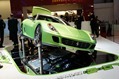
Having experimented with other layouts as well, Ferrari decided to go the hybrid way. It gave us a sneak preview of what it has in store for its future V12s at the 2010 Geneva Motor Show with the 599-based HY-KERS concept.
The hybrid system comprises a compact and light electric motor coupled to the dual-clutch gearbox and a battery pack encased in the underbody. It cuts CO2 emissions by 35 percent while, at the same time, adding another 100HP to the car’s total output, verifying Felisa’s claim that “our hybrid system won’t be just about creating power, but saving energy too”.
Felisa commented, “This technology is expensive today, but it has been designed to fit all our future architecture”. So, will all future Ferraris be hybrids? “If we go ahead, it will be fitted as standard. It’s not the sort of thing you offer as an option," explained Felisa.
Finally, Ferrari’s CEO did not dismiss the notion of offering six-cylinder engines on future models: “Why not six cylinders? It’s far away in the future, perhaps, but it is clear that perceptions have altered. Even in the US, where until a few years ago eight cylinders was the minimum, it is clear attitudes have changed”.
For those of you that baulk at the idea of a Ferrari with less than eight cylinders, we’ll just say that the company’s first mid-engined road car, the 1966 206 Dino, was powered by a V6. So maybe it won’t be merely downsizing, but a return to the company’s roots, as well.
PHOTO GALLERY

Ferrari-599-HY-KERS-1Ferrari-599-HY-KERS-2Ferrari-599-HY-KERS-3Ferrari-599-HY-KERS-6Ferrari-599-HY-KERS-7Ferrari-Dino-246-GTSFerrari-F12berlinetta -1Ferrari-V12-1FERRARI_HY_KERS_2

THE UNDERCOVER PORSCHE GT2 CAR

I thought it would be nice to show other Speedhunters something unique and exclusive as an added bonus to our Porsche feature month.

As some of you may know, I work on the need for Speed ​​Car team as the main vehicle Concept Artist for our Downtown Vancouver Studio. The majority of my working days is taken to design bodykits and cars for hire and help / direction vinyl. I will explain the process of designing a body kit for a single car key in our game. I think this is the first time we showed off the development process outside of EA Blackbox.
In the production at the beginning of Need for Speed: Undercover, we started looking at the cars of our characters and what might lead car would end up on the cover. It's been a while since Porsche was introduced on a need to cover speed, so we decided to use the iconic Porsche 911 for this game.

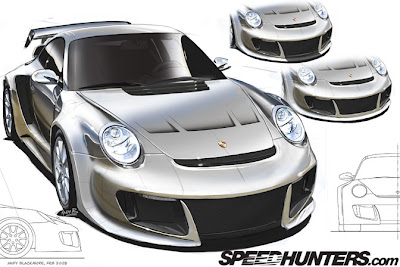
This called for a unique body kit for the 997 GT2. The brief was to create an "aggressive, but tasteful" kit. Yes, these are the very words! As an artist concept of primary vehicle, it was my job to make this "brief" in something visual. ...

It was important not to destroy the classic lines of the 911 and it was vital that the kit is fully integrated, as the trend of the real world continues to move away from wild bodykits. Its usually a quick turn around for a day or two to get a design kit, so it was a nice change to have the extra time to explore shapes, which really paid off. I also wanted it to remain credible.

Porsche was also involved at an early stage, so it was time to draw with one of my favorite pieces of technology, my Wacom Cintiq. I love this stuff!
Early drawings show the inquiry into the forms of entry. I had a vision clear enough to the rear and side, but the front needs more exploration. The back was defined by a carbon diffuser and a large wide-mesh grid, which will also house the license plate. I also designed a new rear wing, which is mounted on the trunk GT2 changed. The wing supports have larger air intakes for the engine more extreme.


The Porsche Carrera GT and 959 influenced the side profile. As the brief required a widebody kit, I joined a larger vent in the rear Fender air, similar to the Carrera GT, the mixture of the shoulder of the main body, which often detects light along the door .

The front was more of a challenge. Research has shown that we need a front bumper brand new, rather than a lip kit to give it a new identity. We needed something dramatic that would be unique to our products. As you can see, I focused on the design, to work with the stock radiator and cooling.

In the end I went for a design that was extreme but believable, with cooling radiators, brakes and intercooler splitter and an integrated lower front for aerodynamics. The new bumper extends further forward than the stock to give an aggressive (but tasteful!) Watch. We have also included the second actions GT2/Turbo lights and indicators for realism. The cover is a new design for Undercover, which is exclusive to mid-engined cars in / out, inspired by GT1 and GT2 cars.

Once I had settled on a design, it was out of the Porsche Design Studio for approval. Fortunately, it was approved without change. Whew!

The car was then modeled by one of our car modelers, Angelo Borrillo. Meanwhile, Concept Artist, Mike Hayes, with the help of Carl Jarrett, James Lau and I were watching the livery and paint (I do not use the term, vinyl, this is not really a vinyl!) .


Mike has explored a number of opportunities and we agreed from the outset that the focus would be on different material finishes while Carl concentrated on how it sounds in the game

We noted a growing trend of matte black (sometimes called satin, or "murdered") paint on modern cars, which was inspired by Rat-Rods. There was a slow transition of the finish-roads in rat muscle 60 and now modern cars. I wanted to go further, based on a number of cars we had seen in recent years SEMA, where Flat Black was mixed with glossy finish that is a trend of development.This car needs to stand out, so we investigated how different colors work with the matte black. Ultimately, we went to a deep red, which complements the lines of the car while not being too bright. Gives it a chic look and is suitable to the character that drives the Porsche.

By the time the livery was approved, the model was complete and we could see the end result in the game
So hope this gives you a little background on what I work on when I'm not Speedhunting, and how we designed this kit in particular.

2013 Ford Taurus Reviews & Pictures

Pictures Ford Taurus 2013 From Front Angle
2013 Ford Taurus Reviews & Pictures. Here is the Ford Taurus. You can see pictures, reviews, specifications & prices Ford Taurus in here. Ford Taurus is the first car in Ford’s North American lineup to offer the advanced 2.0-liter EcoBoost engine, combining a turbocharger with gasoline direct injection. It is expected to deliver best-in-class highway fuel economy of at least 31 mpg. Providing plenty of power, the 2.0-liter EcoBoost engine will deliver an estimated 237 horsepower and 250 lb.-ft. of torque.
Pictures Ford Taurus 2013 From Rear Angle
Engine & Performance :
* Base engine size: 3.5 L
* Cam type: Double overhead cam (DOHC)
* Cylinders: V6
* Valves: 24
* Valve timing: Variable
* Torque: 249 ft-lbs. @ 4500 rpm
* Horsepower: 263 hp @ 6250 rpm
* Turning circle: 39.7 ft.
* Base engine type: gas
Pictures Ford Taurus 2013 from the Front
Pictures Ford Taurus 2013 Rear View
2013 Ford Taurus Prices : $25,000-$35,000

2012 Ford Falcon XR6 Reviews & Pictures

2012 Ford Falcon XR6 Angle View
2012 Ford Falcon XR6 Reviews & Pictures. Here is the Ford Falcon XR6. You can look at reviews, specs, prices & pictures Ford Falcon XR6 in here. This information about 2012 Ford Falcon XR6 Review and Pictures. A step Ford up from the base model Falcon, the XR range offers something a little bit special with better looks and increased performance. And let’s not forget, greater street credibility.
2012 Ford Falcon XR6 Interior
The Ford XR6 Interior very appealing. It’s less muscular than some if its rivals. In a good way. Exterior proportions and slender body lines create a clean, balanced shape. Exterior styling cues of the Ford XR6 include 17-inch alloy wheels, fog lights and a rear spoiler. Compare the looks of the Ford XR6 and the Holden Commodore, and the Commodore looks a tad lardy – or is that muscle?
2012 Ford Falcon XR6 Engine
The Ford Falcon XR6 Engine is the cheapest and most simple package in the XR range, which sees beefier offerings in the form of the XR6 Turbo and XR8. The 4.0-litre, six-cylinder engine of the Ford XR6 reaches peak power of 195kW at 6000rpm and torque tops out at 391Nm at 3250rpm. (The XR6 Turbo leaps up to 270kW at 5250rpm and 533Nm at 2000-4750rpm.)
2012 Ford Falcon XR6 Rear View
Behind the wheel, the Ford Falcon XR6 delivers a composed ride that sits glued to the road and flat through corners thanks to nice sports suspension. The ride is reasonably firm while still offering a nice level of cushioning from harsh road surfaces.

The Toyota FT-HS Hybrid Sports Car

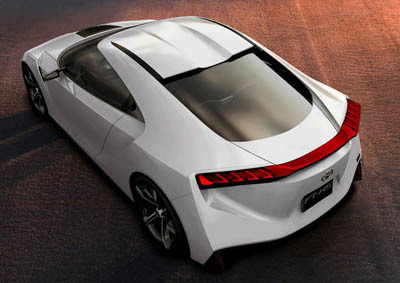
The Toyota FT-HS Hybrid Sports Concept
The Toyota FT-HS hybrid sports concept.

The FT-HS incorporates hybrid capability while maintaining sports car essentials, such as a sleek profile, lightweight aero-dynamic materials, and an advanced high-output powertrain for revolutionary acceleration and optimal performance. This 21st century sports car is fun-to-drive with eco-friendly benefits such as ultra-low emissions and fuel efficiency. The FT-HS appeals to an emerging buyer who grew up eco-conscious and perceives technology as a necessity, not a luxury.

This two-plus-two concept is a front-engine, rear-drive sports car with a projected zero-to-60 acceleration in the four-second range. A powerful V6, 3.5L-engine is coupled with a 21st century sports hybrid system with a target power output of approximately 400-horsepower. At a mid-priced market position, FT-HS would be a true "attainable exotic" with 21st Century performance.

FT-HS expresses the core values of a Toyota Brand design strategy that combines two key elements: J-Factor and Vibrant Clarity. J-Factor refers to the local and global acceptance of Japanese-inspired design and cultural sensibilities.

The exterior design was led by Calty designer, Alex Shen. From a design perspective, the theme of the FT-HS achieves sleek, taut surfaces in its exterior features - especially in the doors and body style. The front and rear have been sculpted to remove mass around key functional components. Freeform geometrics define the integration of fluid surfaces contrasting hard-edge "Aero-Corners" which promote smooth airflow and reduce turbulence.

The roof has a distinctive scooped-out section designed to reduce aerodynamic drag and provide head room at the key areas. Made from carbon fiber Kevlar, the roof retracts so that the roof panel and back window pivot fluidly in a downward motion to stow in the rear seat space.
The Toyota FT-HS Hybrid Sports Concept
The vehicle's triangular profile has a floating "C" pillar, aero corners, a full upper-body pan, and innovative open top. A hood features a scalloped channel, exposing the hybrid engine. Integrated component architecture can be seen in the aerospace-inspired lighting. The tail lamp unit spans the entire rear, and has an integrated retractable spoiler. Light-emitting diode (LED) clusters are located in the headlamps and the wing for energy-efficiency and decreased heat loss. Other exterior features include a speed-activated wing that elevates at high speed for additional stability and traction. The rear showcases a carbon fiber lower diffuser with integrated wide exhaust and carbon fiber wheels.

The Toyota FT-HS Hybrid Sports Concept
The driver-oriented interior was created by Calty designer, William Chergosky and exudes sleekness, technology, and performance. The lean skeletal look is achieved with exposed cross-car architecture and high-tech materials such as carbon fiber, and titanium. FT-HS' interior features create a dedicated driver's cockpit which include subtractive mass expressions such as cross-car instrument panel structure and delta wing driver pod.

By eliminating the "B" pillar and creating a suspended "C" pillar, the minimalist style works in conjunction with subtractive mass. An integrated instrument panel surrounds the driver, creating an enclosed pod effect. Armrests flow seamlessly into the door and surrounding interior.
The Toyota FT-HS Hybrid Sports ConceptSeating is optimized for a lightweight appearance and function: the seating accommodates four and then coverts to a two-seater when the roof retracts. The passenger-seat area is open with a simple exposed airbag on the cross-car beam.
A telescoping hub-less steering wheel incorporates semi-automatic paddle shifters and allows the meter to be shifted forward in order to shorten the driver's focus-time between the road and meter, and ultimately enhance driver focus.

Toyota FT-HS Concept Vehicle Preliminary Specifications Drivetrain
3.5 Liter V6 hybrid electric
DIMENSIONS (inches)
* Overall Length: 170.27
* Overall Width: 73.23
* Overall Height: 50.79
* Wheelbase: 104.33
Wheels: Carbon Fiber
Tire Sizes: Front 245/35R21 Rear 285/30R21

The Toyota FT-HS Hybrid Sports Car

The Toyota FT-HS Hybrid Sports Concept
The Toyota FT-HS hybrid sports concept.

The FT-HS incorporates hybrid capability while maintaining sports car essentials, such as a sleek profile, lightweight aero-dynamic materials, and an advanced high-output powertrain for revolutionary acceleration and optimal performance. This 21st century sports car is fun-to-drive with eco-friendly benefits such as ultra-low emissions and fuel efficiency. The FT-HS appeals to an emerging buyer who grew up eco-conscious and perceives technology as a necessity, not a luxury.

This two-plus-two concept is a front-engine, rear-drive sports car with a projected zero-to-60 acceleration in the four-second range. A powerful V6, 3.5L-engine is coupled with a 21st century sports hybrid system with a target power output of approximately 400-horsepower. At a mid-priced market position, FT-HS would be a true "attainable exotic" with 21st Century performance.

FT-HS expresses the core values of a Toyota Brand design strategy that combines two key elements: J-Factor and Vibrant Clarity. J-Factor refers to the local and global acceptance of Japanese-inspired design and cultural sensibilities.

The exterior design was led by Calty designer, Alex Shen. From a design perspective, the theme of the FT-HS achieves sleek, taut surfaces in its exterior features - especially in the doors and body style. The front and rear have been sculpted to remove mass around key functional components. Freeform geometrics define the integration of fluid surfaces contrasting hard-edge "Aero-Corners" which promote smooth airflow and reduce turbulence.

The roof has a distinctive scooped-out section designed to reduce aerodynamic drag and provide head room at the key areas. Made from carbon fiber Kevlar, the roof retracts so that the roof panel and back window pivot fluidly in a downward motion to stow in the rear seat space.
The Toyota FT-HS Hybrid Sports Concept
The vehicle's triangular profile has a floating "C" pillar, aero corners, a full upper-body pan, and innovative open top. A hood features a scalloped channel, exposing the hybrid engine. Integrated component architecture can be seen in the aerospace-inspired lighting. The tail lamp unit spans the entire rear, and has an integrated retractable spoiler. Light-emitting diode (LED) clusters are located in the headlamps and the wing for energy-efficiency and decreased heat loss. Other exterior features include a speed-activated wing that elevates at high speed for additional stability and traction. The rear showcases a carbon fiber lower diffuser with integrated wide exhaust and carbon fiber wheels.

The Toyota FT-HS Hybrid Sports Concept
The driver-oriented interior was created by Calty designer, William Chergosky and exudes sleekness, technology, and performance. The lean skeletal look is achieved with exposed cross-car architecture and high-tech materials such as carbon fiber, and titanium. FT-HS' interior features create a dedicated driver's cockpit which include subtractive mass expressions such as cross-car instrument panel structure and delta wing driver pod.

By eliminating the "B" pillar and creating a suspended "C" pillar, the minimalist style works in conjunction with subtractive mass. An integrated instrument panel surrounds the driver, creating an enclosed pod effect. Armrests flow seamlessly into the door and surrounding interior.
The Toyota FT-HS Hybrid Sports ConceptSeating is optimized for a lightweight appearance and function: the seating accommodates four and then coverts to a two-seater when the roof retracts. The passenger-seat area is open with a simple exposed airbag on the cross-car beam.
A telescoping hub-less steering wheel incorporates semi-automatic paddle shifters and allows the meter to be shifted forward in order to shorten the driver's focus-time between the road and meter, and ultimately enhance driver focus.

Toyota FT-HS Concept Vehicle Preliminary Specifications Drivetrain
3.5 Liter V6 hybrid electric
DIMENSIONS (inches)
* Overall Length: 170.27
* Overall Width: 73.23
* Overall Height: 50.79
* Wheelbase: 104.33
Wheels: Carbon Fiber
Tire Sizes: Front 245/35R21 Rear 285/30R21
Related Posts Plugin for WordPress, Blogger...